Monmouth Park has yet to publish its usual press release with official results of Saturday's National Handicapping Championship (NHC) qualifier, but according to the NHC Tour leaderboard page, I finished 21st out of 219 to pick up 578 more Tour Points to land around 200th in the standings.
There's a lot of tournament season to go, but finishing in the Top 150 come season's end would advance my goal to reach a second-straight NHC at Treasure Island come January 2016.
That quest continues this Saturday, with my hard-earned entry in the HorseTourneys.com NHC qualifier; a win would be nice, but building up more Tour Points is becoming a realistic option to advancing to the NHC in Las Vegas, even as a part-time player.
Last week I discussed the NHC Tour points topic and got some interesting feedback.
To recap, I argued that the 2015 NHC Players' Committee needs for next season to reassess its valuation of multi-round on-track handicapping tournaments, specifically Simulcast Series Challenge (SSC) at Monmouth Park.
Data from this past Saturday's contest at Monmouth only underscores my thesis and at the same time validates the parimutuel value to U.S. racetracks of hosting on-track handicapping contests.
The SSC is a $200 buy-in ($100 bankroll and $100 takeout-free prize pool) with 4 rounds of "pre-qualifiers" where the Top 20 finishers in each advance to an "invitational" for two spots to Vegas.
In a break from past years, however, the Players Committee ruled this year that NHC Tour Points would only be awarded to contestants based on the number of SSC Invitational qualifiers (80), rather than a total of entries through the four pre-qualifier rounds (more than 800).
This is a significant difference that could deter NHC Tour members from playing the SSC series.
I, for one, would forgo the SSC again under today's Tour Points structure and budget my money toward online contests with more-favorable NHC Tour points allocations.
I maintain, as written last week, that a) competitors in the 2015 SSC Invitational got stiffed, b) Monmouth needs to leverage its on-track contest circuit lead (30 NHC seats of 600 awarded; most in the country) to endorse change to the benefit of its contest customers, and c) the NTRA should be on board with this logic, since the NHC Tour points allocation devalues the SSC and could hurt Monmouth Park's winter simulcast business through reduced parimutuel pools.
At this past Saturday's NHC qualifier, which awarded NHC spots to the Top 5 finishers, contestants funded an initial $100 bankroll and another $200 each into the prize pool.
As the contest bankroll is "live," contest players bet real money into the pools at Monmouth, Belmont and Pimlico.
A quick look at the data proves interesting.
According to Daily Racing Form, there were 8,055 in attendance at Monmouth Park on Saturday, with $553,095 bet into the mutuel pool on track of a $3.97 million total, or about 14% of the total (on par with a 14.7% average the last 7 live racing days inflated, specifically, by Sunday's Food Truck Festival -- 22%; Saturday's and Monday's got little bump.)
The average of wagers per person, however, this past Saturday was $68.66 -- 30% above the 7-day average and a whopping 66% better than the 3-day Food Truck Festival average, and indicative of the value of core customers betting on the actual races/core track product.
Delving deeper, my initial $100 bankroll -- after "churning" back some winning bets into other races -- produced $261 of total bets across the three contests tracks, including $170 into races at Monmouth Park (and a brutal loss at the wire by Loverbil in the Reilly Stakes for my $40 win wager that compromised my hopes of winning the contest).
That's nearly 150% above the average customer.
Let's assume that every contest player on track loses his/her initial $100 bankroll without a single winner. That's nearly $22,000 of wagers (including $11,000 specifically into Monmouth Park's races; contest rules require that players make at least five wagers of at least $10 each on races at Monmouth, or $50 per player); that's nearly 2% of the on-track mutuel pool alone.
Each $50 increase per contest player on bets into Monmouth's on-track product yields another percentage-point gain in terms of total mutuel pool contribution; so, if 219 players, on average, win a few wagers and "churn" $200-$300 back into Monmouth, they'd comprise nearly 4%-6% of the day's on-track mutuel pool, or nearly 4x the average customer before any cash wagers they may also make outside the contest competition on races at Monmouth.
Keep in mind, too, that contest players are not the casual customer, who might "cash out" after hitting, say, a $200 wager on a race and head home. They're also inflating the win, place and show pools (the only races available for Monmouth Park's contests)
By virtue of the NHC contest player's goal to secure a seat in Vegas, he or she needs to continue betting until the contest's conclusion in order to build top bankroll, so the proposition to the host track is very appealing (i.e., likelihood that the majority of each contestant's money will be kept by the host through losing wagers) when factoring the "churn" element.
Fortunately, not sold on going "all in" on a particular horse in the contest finale with my entire $137.90 bankroll at that time, I wagered $60 and held onto $77.90 to backdoor into 578 NHC Tour points, and so Saturday's game effort (including 28-1 winner Padre Graz in Race 9 from Monmouth, which kept me alive in the contest) was not a complete loss.
What would be a complete loss is if, approaching next season, the NHC Players Committee and NTRA continue to devalue a unique multi-round on-track contest such as the SSC, which funnels real money into the coffers of tracks but gets short shrift by today's NHC Tour Points system.
A far richer analysis of this angle would only validate this point, in my opinion, and one the relevant parties might want to investigate more deeply.
Thursday, June 4, 2015


Thursday, May 28, 2015
The Point of the Matter
If there is one, the upside to finishing three-quarters of a length from winning berths to both the 2016 National Handicapping Championship (NHC) and the $382,000 "The Big One" at Laurel Park this September is that I am now the proud owner of 2,341 points in the NHC Tour standings.
By virtue of a 7th-place finish in the Preakness Day NHC qualifier through HorseTourneys.com, I picked up enough "Tour points" to draw within arm's reach of the Top 150 in the Tour standings, at least at this still-early stage of the 2015 NHC season.
Horseplayers belonging to the NHC Tour can qualify for the $2 million-plus national championship in Las Vegas each January by winning an NHC-sanctioned qualifier, or by accruing enough Tour points in a season to land inside the Top 150 in the Tour standings.
Tour points are awarded for finishing in the top 10% of a tournament's standings and allocated by an Excel formula too difficult for me to describe, but that basically rewards about 3,000 points for first place and graduated down, taking into account the number of individuals (not total entries).
The 280-player tournament I recently played awarded Tour points down to 28th-place, while the NHC Tour's "free" online tournament featuring 1,700 players pays down to 170th. Tournaments at a racetrack pay a 25% points premium compared with online tournaments, encouraging members to play handicapping contests at their nearby racetrack.
Ken Jordan, of nearby Farmingdale, NJ, qualified for (and ultimately won $250,000 as runner-up in) the 2015 NHC through what I'll dub the points "back door," playing well enough throughout the 2014 season and then accruing enough Tour points in a late-season NHC qualifier to win a seat in Vegas this past January.
No matter the avenue, every NHC Tour player's goal is (or should be) to reach Vegas for a shot at the $750,000 top prize and to play against the top players in North America at the 3-day national championship, hosted by Treasure Island.
So, as consolation for one of my selections (14.5-to-1 long-shot named Gemmabeto in Race 5 at Santa Anita on May 16) getting nabbed by 2 others 50 yards from the wire in a nondescript $20,000 maiden claimer (a horse none of the six folks ahead of me in the standings had played), I now have a decent amount of points to at least need to consider the prospect of working my way up to the 7,500 points or so needed to get to Vegas through the back door.
The easiest way for me to return to Vegas for a second-straight season will be an outright win in Saturday's upcoming tournament at Monmouth Park, where the top 5 finishers receive packages to the 2016 NHC. However, another 2 top 10-type finishes could net me enough NHC Tour points to sniff the Top 150 in the year-end standings.
Generally speaking, the NHC Tour points route to Las Vegas is far more difficult for part-time players to attain, since the leaderboard is rife with full-time players who in some cases have already won the maximum 2 spots to the NHC but buy multiple entries to several tournaments and subsequently play handicapping contests to win points for $175,000 of cash awards to the Top 20 in the standings at year's end, including $75,000 and a 2017 NHC berth for the winner.
To be sure, one player I tracked in last year's points standings played in around 80 NHC qualifiers last season, compared with 12-15 that I estimate I played in 2014.
Presumably, a big bankroll and lots more free time than I can afford are needed to load up on points, but I understand and support the concept of rewarding full-time players who pay more into the system and financially support the NHC more than yours truly.
In reality, however, the notion of cracking the Top 20 is impossible for Tour members like me (unless I do extremely well and/or get lucky in the scant number of qualifying tournaments I play), is a tad far fetched, and so I typically play every tournament to win, rather than accrue Tour points.
With that in mind, from a budgetary perspective, I got to thinking about perhaps my absolute favorite tournament, the 4-part Simulcast Series Challenge (SSC) at Monmouth Park each winter and how the NHC Tour points scoring system essentially devalues on-track tournaments of the type that use multiple rounds of play to determine a champion.
For background, the Tour counts each player's Top 6 scoring events throughout the season to determine the scoring champion. Of those, 1 event must be a "live" tournament at the track, while the other 5 can come from online tournaments (or a second or third "on-track" qualifier as well).
The mandate of one on-track tournament score is, in part, to encourage business at NTRA-member tracks, such as a Monmouth Park, which benefits when players in its NHC qualifying tournaments are wagering real money into the actual betting pools and creating so-called "churn" -- a favorable proposition to the National Thoroughbred Racing Association and its member tracks.
The alternative for an NHC Tour player is to sit at home and play a tournament online through HorseTourneys.com or another non-NTRA venue, where no money is placed into the betting pools (players pay, for instance, a $155 fee to play in a tournament where no cash prizes are paid or money is bet into the pools) but, rather, tournament outcomes are based on mythical $2 win-place wagers.
In this scenario, entry fees go to the tournament host, who has operating costs and pays double the fee (around $7,500) to NTRA to buy the NHC "seats" to Las Vegas to award as contest prizes. NTRA-member venues, such as Monmouth Park, pay half the rate.
I contacted NHC Players' Committee chairman Christopher Larmey to express my concern that the SSC is scored only as an 80-player contest instead of considering that there were around 800-900 paid entries at $200 each across the four rounds (players are allowed to buy 2 entries per event).
One can theorize that only 100 individuals each bought 2 entries to each of the 4 SSC qualifiers, thereby making the 800-900 entry figure appear grossly inflated, but several people I know (myself included) only buy 1 entry per SSC qualifier. So, if I had to guess, across all four rounds of contests leading up to the SSC championship, there were somewhere between 300-400 unique entries.
Edward Lambert, the 7th-place finisher in the SSC Invitational on April 25, won only 772 Tour points for finishing in the same spot in the standings as I did in my 280-player HorseTourneys.com contest on Preakness Day.
And, unlike simply forking over a $155 entry fee as I did to enter the HorseTourneys contest, Lambert had to make it through nearly 200 entries to the January 12 SSC pre-qualifier just to make it to the SSC Invitational, comprised of the top 20 finishers of each of the 4 qualifying rounds invited to play in late April for 1 of 2 berths to the Vegas championship.
By comparison -- 1 tournament for $155 and 2,341 NHC Tour points, vs. 2 tournaments for at least $400 of entry fees and a mere 772 NHC Tour points in what is without question a harder format.
On paper, and setting aside that the SSC pays some meaty cash prizes (with a 0% takeout on entry fees) to the Top 10 finishers in each leg of the SSC, it gets me thinking that the SSC is a riskier, less-valuable cost AND points proposition.
"Monmouth (Park) has a great schedule of contests this year with all sorts of formats and opportunities for players," emailed Larmey. "The sort of variety is exactly what we are hoping to promote and we certainly don't want to do anything to discourage Monmouth from continuing to provide such great opportunities to Tour players."
I expressed to Larmey and will reiterate to the Players' Committee when rules are drafted or reconsidered for next season that the Tour needs to at least return to the system whereby NHC Tour points are allocated based on the total number of entrants throughout the SSC Series, similar to when I finished 13th in the 2013 SSC Invitational and earned 1,000+ Tour points since 300+ entries were factored into the scoring methodology.
My concern is that SSC on-track tournament players such as Edward Lambert got shortchanged and may contemplate NHC Tour points values in determining whether to compete on-track; in this case, at Monmouth Park, where contest organizer and marketing manager Brian Skirka has clearly stamped the Oceanport, NJ track as North America's leader in on-track NHC qualifying contests, offering nearly 30 spots (of 600) to Las Vegas in January 2016.
Monmouth Park, in my view, should be able to leverage this stronghold to protect the SSC, which is as close as any tournament I have played as the National Handicapping Championship itself, melding the need to analyze several dozen races from multiple simulcast tracks in a 5-hour window down to 10 or so contest plays, but (contrary to the NHC itself) at the same time managing a live-money bankroll that goes into the real mutuel pools in a quiet winter racing season where there's no live racing in Oceanport (an implied benefit to the NTRA and an NTRA-member track).
The fact that 2015 NHC champion John O'Neill and 2015 NHC runner-up Kenny Jordan (who, coincidentally, as I understand from a friend qualified for Las Vegas by scoring enough Tour points to barely finish in the Top 150 in the year-end points standings) practically dominated Las Vegas in January signals the value of their handicapping experience garnered from the difficult Simulcast Series Challenge.
I would encourage the NHC Tour Players' Committee to revisit the scoring of the SSC, since sitting today around 300th (of 5,000 members) in the Tour standings I'm thinking I would have been better off from a points-building perspective just sitting out of the January, February and March SSC qualifiers and entered an online tournament sponsored by host that's not an NTRA member or contributing money into the real parimutuel betting pools of North American racetracks.
By virtue of a 7th-place finish in the Preakness Day NHC qualifier through HorseTourneys.com, I picked up enough "Tour points" to draw within arm's reach of the Top 150 in the Tour standings, at least at this still-early stage of the 2015 NHC season.
Horseplayers belonging to the NHC Tour can qualify for the $2 million-plus national championship in Las Vegas each January by winning an NHC-sanctioned qualifier, or by accruing enough Tour points in a season to land inside the Top 150 in the Tour standings.
Tour points are awarded for finishing in the top 10% of a tournament's standings and allocated by an Excel formula too difficult for me to describe, but that basically rewards about 3,000 points for first place and graduated down, taking into account the number of individuals (not total entries).
The 280-player tournament I recently played awarded Tour points down to 28th-place, while the NHC Tour's "free" online tournament featuring 1,700 players pays down to 170th. Tournaments at a racetrack pay a 25% points premium compared with online tournaments, encouraging members to play handicapping contests at their nearby racetrack.
 |
| Photo courtesy of Let's Go Arts blog |
NHC Tour Points Reward Quality...
Ken Jordan, of nearby Farmingdale, NJ, qualified for (and ultimately won $250,000 as runner-up in) the 2015 NHC through what I'll dub the points "back door," playing well enough throughout the 2014 season and then accruing enough Tour points in a late-season NHC qualifier to win a seat in Vegas this past January.
No matter the avenue, every NHC Tour player's goal is (or should be) to reach Vegas for a shot at the $750,000 top prize and to play against the top players in North America at the 3-day national championship, hosted by Treasure Island.
So, as consolation for one of my selections (14.5-to-1 long-shot named Gemmabeto in Race 5 at Santa Anita on May 16) getting nabbed by 2 others 50 yards from the wire in a nondescript $20,000 maiden claimer (a horse none of the six folks ahead of me in the standings had played), I now have a decent amount of points to at least need to consider the prospect of working my way up to the 7,500 points or so needed to get to Vegas through the back door.
The easiest way for me to return to Vegas for a second-straight season will be an outright win in Saturday's upcoming tournament at Monmouth Park, where the top 5 finishers receive packages to the 2016 NHC. However, another 2 top 10-type finishes could net me enough NHC Tour points to sniff the Top 150 in the year-end standings.
...and Quantity...
Generally speaking, the NHC Tour points route to Las Vegas is far more difficult for part-time players to attain, since the leaderboard is rife with full-time players who in some cases have already won the maximum 2 spots to the NHC but buy multiple entries to several tournaments and subsequently play handicapping contests to win points for $175,000 of cash awards to the Top 20 in the standings at year's end, including $75,000 and a 2017 NHC berth for the winner.
To be sure, one player I tracked in last year's points standings played in around 80 NHC qualifiers last season, compared with 12-15 that I estimate I played in 2014.
Presumably, a big bankroll and lots more free time than I can afford are needed to load up on points, but I understand and support the concept of rewarding full-time players who pay more into the system and financially support the NHC more than yours truly.
In reality, however, the notion of cracking the Top 20 is impossible for Tour members like me (unless I do extremely well and/or get lucky in the scant number of qualifying tournaments I play), is a tad far fetched, and so I typically play every tournament to win, rather than accrue Tour points.
...but Devalue Monmouth Park's Winter Simulcast Series
With that in mind, from a budgetary perspective, I got to thinking about perhaps my absolute favorite tournament, the 4-part Simulcast Series Challenge (SSC) at Monmouth Park each winter and how the NHC Tour points scoring system essentially devalues on-track tournaments of the type that use multiple rounds of play to determine a champion.
For background, the Tour counts each player's Top 6 scoring events throughout the season to determine the scoring champion. Of those, 1 event must be a "live" tournament at the track, while the other 5 can come from online tournaments (or a second or third "on-track" qualifier as well).
The mandate of one on-track tournament score is, in part, to encourage business at NTRA-member tracks, such as a Monmouth Park, which benefits when players in its NHC qualifying tournaments are wagering real money into the actual betting pools and creating so-called "churn" -- a favorable proposition to the National Thoroughbred Racing Association and its member tracks.
The alternative for an NHC Tour player is to sit at home and play a tournament online through HorseTourneys.com or another non-NTRA venue, where no money is placed into the betting pools (players pay, for instance, a $155 fee to play in a tournament where no cash prizes are paid or money is bet into the pools) but, rather, tournament outcomes are based on mythical $2 win-place wagers.
In this scenario, entry fees go to the tournament host, who has operating costs and pays double the fee (around $7,500) to NTRA to buy the NHC "seats" to Las Vegas to award as contest prizes. NTRA-member venues, such as Monmouth Park, pay half the rate.
Proposal for a Workable Solution to Protect an NTRA Affiliate
I contacted NHC Players' Committee chairman Christopher Larmey to express my concern that the SSC is scored only as an 80-player contest instead of considering that there were around 800-900 paid entries at $200 each across the four rounds (players are allowed to buy 2 entries per event).
One can theorize that only 100 individuals each bought 2 entries to each of the 4 SSC qualifiers, thereby making the 800-900 entry figure appear grossly inflated, but several people I know (myself included) only buy 1 entry per SSC qualifier. So, if I had to guess, across all four rounds of contests leading up to the SSC championship, there were somewhere between 300-400 unique entries.
Edward Lambert, the 7th-place finisher in the SSC Invitational on April 25, won only 772 Tour points for finishing in the same spot in the standings as I did in my 280-player HorseTourneys.com contest on Preakness Day.
And, unlike simply forking over a $155 entry fee as I did to enter the HorseTourneys contest, Lambert had to make it through nearly 200 entries to the January 12 SSC pre-qualifier just to make it to the SSC Invitational, comprised of the top 20 finishers of each of the 4 qualifying rounds invited to play in late April for 1 of 2 berths to the Vegas championship.
By comparison -- 1 tournament for $155 and 2,341 NHC Tour points, vs. 2 tournaments for at least $400 of entry fees and a mere 772 NHC Tour points in what is without question a harder format.
On paper, and setting aside that the SSC pays some meaty cash prizes (with a 0% takeout on entry fees) to the Top 10 finishers in each leg of the SSC, it gets me thinking that the SSC is a riskier, less-valuable cost AND points proposition.
"Monmouth (Park) has a great schedule of contests this year with all sorts of formats and opportunities for players," emailed Larmey. "The sort of variety is exactly what we are hoping to promote and we certainly don't want to do anything to discourage Monmouth from continuing to provide such great opportunities to Tour players."
.jpg?n=4528) |
| Monmouth Park offers the most on-track tournament seats to the 2016 National Handicapping Championship |
My concern is that SSC on-track tournament players such as Edward Lambert got shortchanged and may contemplate NHC Tour points values in determining whether to compete on-track; in this case, at Monmouth Park, where contest organizer and marketing manager Brian Skirka has clearly stamped the Oceanport, NJ track as North America's leader in on-track NHC qualifying contests, offering nearly 30 spots (of 600) to Las Vegas in January 2016.
Monmouth Park, in my view, should be able to leverage this stronghold to protect the SSC, which is as close as any tournament I have played as the National Handicapping Championship itself, melding the need to analyze several dozen races from multiple simulcast tracks in a 5-hour window down to 10 or so contest plays, but (contrary to the NHC itself) at the same time managing a live-money bankroll that goes into the real mutuel pools in a quiet winter racing season where there's no live racing in Oceanport (an implied benefit to the NTRA and an NTRA-member track).
The fact that 2015 NHC champion John O'Neill and 2015 NHC runner-up Kenny Jordan (who, coincidentally, as I understand from a friend qualified for Las Vegas by scoring enough Tour points to barely finish in the Top 150 in the year-end points standings) practically dominated Las Vegas in January signals the value of their handicapping experience garnered from the difficult Simulcast Series Challenge.
I would encourage the NHC Tour Players' Committee to revisit the scoring of the SSC, since sitting today around 300th (of 5,000 members) in the Tour standings I'm thinking I would have been better off from a points-building perspective just sitting out of the January, February and March SSC qualifiers and entered an online tournament sponsored by host that's not an NTRA member or contributing money into the real parimutuel betting pools of North American racetracks.
Friday, May 15, 2015
Preakness Preview: Perception Again Trumps Reality
The May 3 Bloomberg Business postscript to the Kentucky Derby headlined "American Pharoah Whipped 32 Times in Victory" was as low as they come and better reserved for the Animal Times of the media, not a presumably distinguished newswire, and no less from an acquaintance I have spent a few pleasant afternoons alongside at Saratoga.
Ironic that, the morning after the $100-a-head Mayweather-Pacquiao mockery of boxing where no one sustained so much as a hangnail, thoroughbred racing exited its own ring the next morning with a major shiner and sent the industry into damage control mode.
Bloomberg author David Papadopoulos, whether by design or sabotaged by a headline editor with a vengeance or ax to grind against thoroughbred racing and/or riding crops, sparked a mini controversy over American Pharoah's winning ride in the Derby by Victor Espinoza, whose "use of the crop fell within (Kentucky) regulations," according to a subsequent ruling by Kentucky racing steward.
End of story, right?
Certainly not from the PETA set, nor from the perspective of handicapping the Preakness Stakes, where American Pharoah drew the rail and is the 4-to-5 favorite in Saturday's reunion with Kentucky Derby runners up Firing Line and Dortmund, and facing five "new shooters" potentially as fabulous but just as unknown as the Third Tenor. Heck, there's one named after a Steely Dan song who was 115-to-1 in the Remsen Stakes and is a juicy 20-to-1 in the Preakness Stakes on Saturday.
In all likelihood, I will not bet the Preakness as a singular race as I did with the Kentucky Derby, where my money was mostly on Frosted over American Pharoah (in my view, Frosted could have won had Joel Rosario recalled that he, too, had a riding crop to prompt Frosted - 4th-place finisher and by far the best late runner of the bunch - sooner than he had in the stretch).
The only value on American Pharoah as a straight bet in the Preakness will be the 3-to-2 "odds boost" on up to a $25 win wager through the TVG mobile betting app from noon-1 p.m. ET on Friday.
Maybe if American Pharoah drifts up to 1-to-1 or 6-to-5 and I'm atop the leaderboard in Saturday's NHC-Big Game handicapping contest at HorseTourneys.com he might get my pick (huge favorites generally are not worth playing in notional-dollar handicapping contests, since the win-place points are too low), but otherwise I am not sold on the upstarts in the field merely to fish for a price and will be urging American Pharoah on verbally in front of a TV.
In the wake of the riding crop sidebar that has sapped my interest in extensively handicapping the Preakness, I am hoping for a Secretariat-in-the-Belmont-type 30-length rout by Pharoah that silences the riding crop debate.
Nonetheless, from a research sense, I wanted to delve a little more into the riding crop issue and whether Victor Espinoza's heavy "encouragement" of Pharoah on the Churchill Downs oval was a) as much an eyesore to others in the industry and/or b) compromises the horse's Preakness chances.
From the humanitarian perspective, the ideal might be for a governing body to ban riding crops from thoroughbred racing, but humanizing an equine animal does not seem rational.
"(The) focus on the whip, while understandable and appropriate, is at times exaggerated. Horses being whipped and whipped and whipped is not good for horses or beneficial to the racing outcome," said Robb Levinsky, lifelong horseman and the founder, co-managing partner and racing manager at Kenwood Racing, a growing NJ-based partnership. "People sometimes relate horses to themselves, but the horse is a very different physical and physiological being than a human."
Levinsky relayed two stories to corroborate this theme.
The first involved a Kenwood horse named Long May You Run, a 5-year-old gelding with 4 wins in 12 tries and nearly $100,000 of earnings.
After an easy victory in a $25,000 claimer at Penn National last June, Levinsky said trainer Mark Salvaggio, in a rare move, encouraged Levinsky to wheel Long May You Run back a week later against tougher company, citing the horse's peak form. True to form, the horse won a $33,000 state-bred allowance by nearly five lengths and was not physically taxed.
The second involved an unnamed 9-year-old horse in training at Calder in Florida.
Levinsky noted that the exercise rider ignored the trainer's instructions to refrain from any encouragement or use of a whip on an older horse merely out for a gallop. The rider used the riding crop twice on the horse and returned to a disgruntled trainer.
Now, on the surface, an outsider could look entirely differently on these seemingly unrelated scenarios (to each other and American Pharoah), all without understanding the context.
One could say that a race horse should never run two races seven days apart, and even Levinsky admitted some apprehension about the notion, since Kenwood puts the welfare of its horses above all else.
In the latter scenario, a clocker could simply take notes on the workout and be indifferent to the two whip taps of the exercise rider on a horse out for a breeze but be totally unaware of the trainer's dismay over the rider ignoring explicit instructions to not use the riding crop on the horse.
Point being...most of us, whether a horseplayer, part-time blogger, seasoned member of the thoroughbred racing media, supporter of People for the Ethical Treatment of Animals (PETA), or casual observer, have zero clue about the intentions of a race horse's owner, trainer, jockey and handlers, which is what makes handicapping (and judgement of others) so difficult, and fun.
"Sometimes you have to trust (a horse's) connections running the animal," said Levinsky, who as the recent astute buyer of a pair of 2-year-old fillies by Pioneer of the Nile (sire of American Pharoah) has a clear rooting interest in Pharoah this Saturday; a Pharoah win makes his stables purchase of Makanow Pharoah and Sonny's Pharoah that much more compelling.
Of utmost importance to most of us that follow thoroughbred racing is the horse's welfare, but a respectable media outlet's use of a shocking headline focused on a jockey's use of a legal racing tool in a major race is rash and irresponsible, in my view.
Espinoza, who clearly rode American Pharoah hard in the Derby and six days later was fined by Santa Anita Park stewards for causing a "break in the skin" with a riding crop in an unrelated race on April 4 in California (a state that last November toughened its riding crop restrictions), did not break Churchill Downs' "house rules" on riding crop usage, according to Kentucky race stewards.
The replay of this year's Kentucky Derby could be picked clean and lumped together with aggressive rides of Smarty Jones in the 2004 Belmont Stakes, Real Quiet in the 1998 Kentucky Derby and Silver Charm in the 1997 Kentucky Derby,
To the contrary, consider this from Hall of Fame jockey Eddie Delahoussaye in an October 19, 2011 Jay Hovdey column in Daily Racing Form. "One year I got fined here in California for not hitting a horse. It was on a bad track, and he was sore. But I got fined anyway. Go figure."
Hovdey ended that column with a Delahoussaye quote - again, from 4 years ago - that best encapsulates where insinuating through a headline that Espinoza abused American Pharoah is askew.
"You can hit a horse only five times and cut him up bad, or you can hit him 20 times in the stretch, keeping in rhythm, and the horse will be fine," Delahoussaye told Hovdey in the 2011 column.
"It's up to the racing officials to know the difference between abuse and proper use."
A 4-to-5 morning line on American Pharoah suggests the betting public will be undeterred by the grueling Kentucky Derby effort.
But, will feelgood story (back-to-back Derby winner) turned media whipping boy Victor Espinoza think twice in the Preakness when in another stretch duel with Dortmund or Firing Line (or one of the five Jose Carrerases...you know, the Third Tenor)?
It'll be interesting to see what impact the riding crop has on the outcome of the 2015 Preakness.
Ironic that, the morning after the $100-a-head Mayweather-Pacquiao mockery of boxing where no one sustained so much as a hangnail, thoroughbred racing exited its own ring the next morning with a major shiner and sent the industry into damage control mode.
Bloomberg author David Papadopoulos, whether by design or sabotaged by a headline editor with a vengeance or ax to grind against thoroughbred racing and/or riding crops, sparked a mini controversy over American Pharoah's winning ride in the Derby by Victor Espinoza, whose "use of the crop fell within (Kentucky) regulations," according to a subsequent ruling by Kentucky racing steward.
End of story, right?
Certainly not from the PETA set, nor from the perspective of handicapping the Preakness Stakes, where American Pharoah drew the rail and is the 4-to-5 favorite in Saturday's reunion with Kentucky Derby runners up Firing Line and Dortmund, and facing five "new shooters" potentially as fabulous but just as unknown as the Third Tenor. Heck, there's one named after a Steely Dan song who was 115-to-1 in the Remsen Stakes and is a juicy 20-to-1 in the Preakness Stakes on Saturday.
 |
| Odds that American Pharoah wins the 2015 Preakness Stakes: 4/5 Odds the average American can name the Third Tenor: 99-1 |
The only value on American Pharoah as a straight bet in the Preakness will be the 3-to-2 "odds boost" on up to a $25 win wager through the TVG mobile betting app from noon-1 p.m. ET on Friday.
Maybe if American Pharoah drifts up to 1-to-1 or 6-to-5 and I'm atop the leaderboard in Saturday's NHC-Big Game handicapping contest at HorseTourneys.com he might get my pick (huge favorites generally are not worth playing in notional-dollar handicapping contests, since the win-place points are too low), but otherwise I am not sold on the upstarts in the field merely to fish for a price and will be urging American Pharoah on verbally in front of a TV.
In the wake of the riding crop sidebar that has sapped my interest in extensively handicapping the Preakness, I am hoping for a Secretariat-in-the-Belmont-type 30-length rout by Pharoah that silences the riding crop debate.
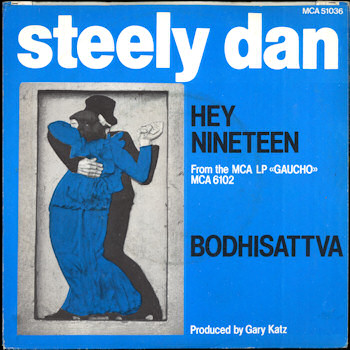 |
| Namesake of Steely Dan B side gets shot against the big boys in 2015 Preakness Stakes |
From the humanitarian perspective, the ideal might be for a governing body to ban riding crops from thoroughbred racing, but humanizing an equine animal does not seem rational.
"(The) focus on the whip, while understandable and appropriate, is at times exaggerated. Horses being whipped and whipped and whipped is not good for horses or beneficial to the racing outcome," said Robb Levinsky, lifelong horseman and the founder, co-managing partner and racing manager at Kenwood Racing, a growing NJ-based partnership. "People sometimes relate horses to themselves, but the horse is a very different physical and physiological being than a human."
Levinsky relayed two stories to corroborate this theme.
The first involved a Kenwood horse named Long May You Run, a 5-year-old gelding with 4 wins in 12 tries and nearly $100,000 of earnings.
After an easy victory in a $25,000 claimer at Penn National last June, Levinsky said trainer Mark Salvaggio, in a rare move, encouraged Levinsky to wheel Long May You Run back a week later against tougher company, citing the horse's peak form. True to form, the horse won a $33,000 state-bred allowance by nearly five lengths and was not physically taxed.
The second involved an unnamed 9-year-old horse in training at Calder in Florida.
Levinsky noted that the exercise rider ignored the trainer's instructions to refrain from any encouragement or use of a whip on an older horse merely out for a gallop. The rider used the riding crop twice on the horse and returned to a disgruntled trainer.
Now, on the surface, an outsider could look entirely differently on these seemingly unrelated scenarios (to each other and American Pharoah), all without understanding the context.
One could say that a race horse should never run two races seven days apart, and even Levinsky admitted some apprehension about the notion, since Kenwood puts the welfare of its horses above all else.
In the latter scenario, a clocker could simply take notes on the workout and be indifferent to the two whip taps of the exercise rider on a horse out for a breeze but be totally unaware of the trainer's dismay over the rider ignoring explicit instructions to not use the riding crop on the horse.
Point being...most of us, whether a horseplayer, part-time blogger, seasoned member of the thoroughbred racing media, supporter of People for the Ethical Treatment of Animals (PETA), or casual observer, have zero clue about the intentions of a race horse's owner, trainer, jockey and handlers, which is what makes handicapping (and judgement of others) so difficult, and fun.
"Sometimes you have to trust (a horse's) connections running the animal," said Levinsky, who as the recent astute buyer of a pair of 2-year-old fillies by Pioneer of the Nile (sire of American Pharoah) has a clear rooting interest in Pharoah this Saturday; a Pharoah win makes his stables purchase of Makanow Pharoah and Sonny's Pharoah that much more compelling.
Of utmost importance to most of us that follow thoroughbred racing is the horse's welfare, but a respectable media outlet's use of a shocking headline focused on a jockey's use of a legal racing tool in a major race is rash and irresponsible, in my view.
Espinoza, who clearly rode American Pharoah hard in the Derby and six days later was fined by Santa Anita Park stewards for causing a "break in the skin" with a riding crop in an unrelated race on April 4 in California (a state that last November toughened its riding crop restrictions), did not break Churchill Downs' "house rules" on riding crop usage, according to Kentucky race stewards.
The replay of this year's Kentucky Derby could be picked clean and lumped together with aggressive rides of Smarty Jones in the 2004 Belmont Stakes, Real Quiet in the 1998 Kentucky Derby and Silver Charm in the 1997 Kentucky Derby,
To the contrary, consider this from Hall of Fame jockey Eddie Delahoussaye in an October 19, 2011 Jay Hovdey column in Daily Racing Form. "One year I got fined here in California for not hitting a horse. It was on a bad track, and he was sore. But I got fined anyway. Go figure."
Hovdey ended that column with a Delahoussaye quote - again, from 4 years ago - that best encapsulates where insinuating through a headline that Espinoza abused American Pharoah is askew.
"You can hit a horse only five times and cut him up bad, or you can hit him 20 times in the stretch, keeping in rhythm, and the horse will be fine," Delahoussaye told Hovdey in the 2011 column.
"It's up to the racing officials to know the difference between abuse and proper use."
A 4-to-5 morning line on American Pharoah suggests the betting public will be undeterred by the grueling Kentucky Derby effort.
But, will feelgood story (back-to-back Derby winner) turned media whipping boy Victor Espinoza think twice in the Preakness when in another stretch duel with Dortmund or Firing Line (or one of the five Jose Carrerases...you know, the Third Tenor)?
It'll be interesting to see what impact the riding crop has on the outcome of the 2015 Preakness.
Friday, May 1, 2015
Kentucky Oaks: Birdatthewire A Clear Single
Offering picks is usually not my theme with this blog, but Oaks-Derby weekend is a must, since everyone tosses their hat in the ring and acts all "expert."
I still have some work to do with Saturday's Derby, but give Birdatthewire the nod over Include Betty, Condo Commando and I'm a Chatterbox in my exacta and trifecta for today's Kentucky Oaks.
 The trip that Birdatthewire got in the Gulfstream Park Oaks sold me.
Birdatthewire appeared to be headstrong and basically strangled by jockey Irad Ortiz down the backstretch, ran into the heels of horses approaching the second turn, and blew by the field (and that same horse) in a race with a dawdling pace.
In the Oaks, I like that she drew an outside post and think she'll get enough speed to run into and mow down front-runner Condo Commando, who looked hand-ridden to me in her win in the Gazelle at Aqueduct but I'm not sure has been challenged by credible foes just yet.
Include Betty has an outside shot, as I see it, at 20-to-1, but my only hesitation with putting her on top is that she's the deepest of closer types and I'm not sure the pace will be frenetic enough for the others to wear down. This, of course, is contingent upon I'm a Chatterbox reverting to her form two back, where unlike the easy front-running score in the Fair Grounds Oaks, she rallied clear late to win.
Anyway, I'll likely invest between $30-$40 in the race, using:
I still have some work to do with Saturday's Derby, but give Birdatthewire the nod over Include Betty, Condo Commando and I'm a Chatterbox in my exacta and trifecta for today's Kentucky Oaks.

Birdatthewire appeared to be headstrong and basically strangled by jockey Irad Ortiz down the backstretch, ran into the heels of horses approaching the second turn, and blew by the field (and that same horse) in a race with a dawdling pace.
In the Oaks, I like that she drew an outside post and think she'll get enough speed to run into and mow down front-runner Condo Commando, who looked hand-ridden to me in her win in the Gazelle at Aqueduct but I'm not sure has been challenged by credible foes just yet.
Include Betty has an outside shot, as I see it, at 20-to-1, but my only hesitation with putting her on top is that she's the deepest of closer types and I'm not sure the pace will be frenetic enough for the others to wear down. This, of course, is contingent upon I'm a Chatterbox reverting to her form two back, where unlike the easy front-running score in the Fair Grounds Oaks, she rallied clear late to win.
Anyway, I'll likely invest between $30-$40 in the race, using:
- Top pick (single): 13
- Second: 3, 5, 8
- Third: 3, 5, 8, 10, 11
- Fourth (possible superfecta): 3, 5, 8, 10, 11, 14
- Oaks-Derby Double: 13 with 2, 15, 18
Wednesday, April 1, 2015
Parx Visit Fuels Hope As Eventual NHC, BCBC Stop
After previewing Parx's first handicapping contest since 2008 last week, I drove the Jersey and Pennsylvania turnpikes 55 minutes to Philadelphia to compete in Saturday's live-money tournament and am impressed by track management's organization and hospitality, and the venue itself as well.
The positives far outweighed my miserable contest picks on a day where the races appeared wide open and just 2 of 9 post-time favorites won, but the handicapping contest winner built a $60 starting bankroll into $1,030.50 (impressive, on a day where the highest win mutuel was $13) to take down the zero-takeout $1,880 first prize.
 |
| Rail-bird view of Saturday's opener |
Saturday was my first visit to Parx. I was unsure what to expect, but found promise as a comfortable, player-friendly venue that should consider expanding into contests tied to the National Handicapping Championship (NHC) or Breeders Cup Betting Challenge (BCBC).
More than 90 players turned out with scant publicity, so with concerted marketing and lessons gleaned from Saturday, Parx likely could draw a much bigger audience, considering its close proximity to major mid-Atlantic markets (NYC, Philadelphia and Baltimore). Parx is an easy ride and right off major highways.
The expense for NHC or BCBC "seats" would presumably be more prohibitive to Parx as a non-NTRA track (non-members pay double the fee to buy "seats" to the NHC, as I understand it), but my views are outside the realm of any track management's financial and operational planning and merely from a weekend player and NHC Tour member perspective.
Phonebet manager Beth Coale and her team did a wonderful job with the logistics, in my view, citing the seamless sign-up, clear instructions on the use of contest wagering cards and articulation of contest rules, plus quick scoreboard updates.
Parx's race facility itself has a fresher vibe than my local track, Monmouth Park, though I would not necessarily attribute that to the live racing element.
The track sits separate from the much larger casino venue but features a really nice poker room and dining as well, is far smaller and clean on the inside, and gives the handicapper plenty of options with two levels of dining service plus a cafeteria-style venue where service is quick and food and drinks are fairly priced and quite good. No, "sorry we're out of that" or "that'll be ready in about 10 minutes" at the dining venue as sometimes found at my home track.
 |
| Funky, Xanadu-like color pattern, but very nice on the inside |
A nice bar at the center of the ground-level area, flanked by cocktail tables with ample seating and lots of simulcast TVs, enriches the building's energy. This is certainly not to pan Monmouth, which is far more scenic and historical but has several nooks and crannies and is simply more cavernous and, therefore, finds customers spread out across a wider plain.
At Parx, you're more among your horseplayer peers by force, and for this reason (and with a casino mindset at play) could serve as a great venue for more handicapping contests.
I could envision a section (similar to the poker room) set aside for tournaments, where much like at the NHC in Vegas two rooms are dedicated to the contest customer, creating a player-friendly and social atmosphere (rather than contest players sprinkled here and there with the ordinary track visitor).
The track and racing product itself is merely functional, in my view. There are not many great places to watch the races and sight lines are modest at best. The paddock is spartan, but I was not there to hang outside anyway on a windy and cold winter afternoon.
Saturday's card was OK but not top-flight weekend racing by any stretch, and I found myself generally taking educated guesses in races mostly filled with claimers, akin to other casino-funded racing venues where the on-track product appears secondary to the core casino product.
For this reason, I would encourage Parx to incorporate other racetracks into its contest mix to attract players, similar to when Monmouth cards live racing but co-mingles, say, a Woodbine or Saratoga, which offer often tougher races and deeper fields. Saturday offered key Derby preps elsewhere, but I get Parx's intent to try and showcase its own racing product.
Considering that Parx hosts live racing year round, in my opinion there is an opportunity for Parx to capitalize on voids in the on-track contest season, especially in October, November and December, when (based on the NHC Tour calendar) there's only one on-track tournament (Aqueduct) in the region for NJ-based horseplayers,
Whichever direction Parx management goes with the handicapping contest theme, Saturday's effort gets thumbs up and proved enough of a success to consider expanding the initiative, in my opinion.
Wednesday, March 25, 2015
PARX Re-Emerges On Contest Circuit
The year was 2008 -- the last time a live thoroughbred horse racing venue in the City of Brotherly Love hosted a handicapping tournament.
Back then, the place was called Philadelphia Park.
When I first started blogging 4-5 years ago about my weekend pursuit of a National Handicapping Championship (NHC) berth, on-track handicapping contests were few and far between, outside of a handful of spots through my local track (Monmouth Park) and a few each at area NYRA tracks.
Until the emergence of online qualifying sites such as HorseTourneys.com and recent surge in on-track qualifying tournaments at Monmouth (now offering nearly 30 NHC "seats," up from 4-6 just a few years back), it seemed as if Jersey-based NHC Tour members had far fewer shots than others at the $2 million-plus NHC held each January in Las Vegas.
However, and despite our inability in New Jersey to qualify for several ADW-sponsored NHC seats via DRFBets.com and TwinSpires.com, Garden Staters have a seemingly bigger menu of "drive-able" contest venues. All are not NHC qualifying contests mind you, but the list includes the Borgata in Atlantic City, Mohegan Sun in Connecticut and, now, Parx Racing and Casino.
In my opinion, the handicapping contest circuit is a clear pocket of strength in the thoroughbred racing industry and one that is grossly underplayed by the media.
January's NHC paid more than $2.6 million of prizes, while contests such as the Breeders Cup Betting Challenge have been highlighted on television shows such as Horseplayers.
There are others less publicized within the industry but well known in NHC Tour circles, such as the Sept. 26-27 Big One at Laurel Park in Maryland, which anticipates paying nearly $400,000 of cash and prizes.
Less than 60 miles from my Jersey Shore-area perch, Parx's recognition of the value of on-track handicapping tournaments is appealing on two fronts:
"I like the idea of promoting interest in our live product," emailed Coale, when asked whether incorporating outside tracks as Monmouth Park does with its Simulcast Series Challenges was considered.
"Our horse population has been well rested by this brutal winter and we're ready to put on some very competitive race cards," said Coale.
Even without live racing, however, handicapping contests increase business for simulcast facilities, including Monmouth Park, where a source was "safe in saying" to me that Monmouth's handle on contest days is about 25% higher than the simulcast handle when there is not a contest taking place on track.
Saturday's total racing menu is robust and features 2014 Pennsylvania Derby contestant and Horse of the Year California Chrome in the $10 million Dubai World Cup in the morning, and a key Triple Crown prep, the Florida Derby, in the late afternoon. These headline races sandwich what appears to be a very playable 9-race live program at Parx, which kicks off at 12:55 p.m. ET.
Participants in Saturday's $100 buy-in tournament ($60 bankroll and $40 toward the zero-takeout prize pool) must play at least 7 of Parx's races, with minimum $2 win, place and/or show wagering required and the option to bet multiple horses per race.
Parx anticipates attracting 200 entries across its six venues, which would provide a $8,000 prize pool where the winner gets 50% and a 46" Smart TV and Parx pays down to the Top 5. All players receive a $10 food and beverage credit and should contact Beth Coale at 215-639-9000 (extension 4215) or bcoale@parxracing.com for further details.
In the event that my wife and kids follow through on their threat for afternoon theater and dinner, making it down to the Philly suburbs to test the waters this Saturday could be in my cards.
 |
| Photo by Eric Kalet |
Under its fresher brand today, Parx Racing and Casino this Saturday, March 28, will host its first handicapping contest in seven years.
Registration for this $100, zero-takeout event runs now through 12:15 p.m. on track and from one of Parx's five "Turf Clubs" across the region.
Registration for this $100, zero-takeout event runs now through 12:15 p.m. on track and from one of Parx's five "Turf Clubs" across the region.
Saturday's contest is not an NHC, Horse Player World Series or Breeders Cup Betting Challenge qualifier, but strictly offers cash and other prizes.
"The hope is that we can build interest in these contests again and get back to the sort of contest that has the higher entry fee necessary to cover the costs of the NHC entry," emailed Beth Coale, Phonebet manager for Parx Racing.
"Right now," continued Coale, "we are taking all the entry fees and awarding them back as cash prizes, which should appeal to our local players."
"The hope is that we can build interest in these contests again and get back to the sort of contest that has the higher entry fee necessary to cover the costs of the NHC entry," emailed Beth Coale, Phonebet manager for Parx Racing.
"Right now," continued Coale, "we are taking all the entry fees and awarding them back as cash prizes, which should appeal to our local players."
Future NHC Venue Hope...
When I first started blogging 4-5 years ago about my weekend pursuit of a National Handicapping Championship (NHC) berth, on-track handicapping contests were few and far between, outside of a handful of spots through my local track (Monmouth Park) and a few each at area NYRA tracks.
Until the emergence of online qualifying sites such as HorseTourneys.com and recent surge in on-track qualifying tournaments at Monmouth (now offering nearly 30 NHC "seats," up from 4-6 just a few years back), it seemed as if Jersey-based NHC Tour members had far fewer shots than others at the $2 million-plus NHC held each January in Las Vegas.
However, and despite our inability in New Jersey to qualify for several ADW-sponsored NHC seats via DRFBets.com and TwinSpires.com, Garden Staters have a seemingly bigger menu of "drive-able" contest venues. All are not NHC qualifying contests mind you, but the list includes the Borgata in Atlantic City, Mohegan Sun in Connecticut and, now, Parx Racing and Casino.
...And Business Booster To Parx
In my opinion, the handicapping contest circuit is a clear pocket of strength in the thoroughbred racing industry and one that is grossly underplayed by the media.
January's NHC paid more than $2.6 million of prizes, while contests such as the Breeders Cup Betting Challenge have been highlighted on television shows such as Horseplayers.
There are others less publicized within the industry but well known in NHC Tour circles, such as the Sept. 26-27 Big One at Laurel Park in Maryland, which anticipates paying nearly $400,000 of cash and prizes.
Less than 60 miles from my Jersey Shore-area perch, Parx's recognition of the value of on-track handicapping tournaments is appealing on two fronts:
- potential NHC venue down the road in a highly populated region
- a means for Parx to promote live racing at its own track, which (based on Dairy Racing Form data) attracted just 3%-8% of total daily handle from March 17-24.
"I like the idea of promoting interest in our live product," emailed Coale, when asked whether incorporating outside tracks as Monmouth Park does with its Simulcast Series Challenges was considered.
"Our horse population has been well rested by this brutal winter and we're ready to put on some very competitive race cards," said Coale.
Even without live racing, however, handicapping contests increase business for simulcast facilities, including Monmouth Park, where a source was "safe in saying" to me that Monmouth's handle on contest days is about 25% higher than the simulcast handle when there is not a contest taking place on track.
Parx Contest Details
Saturday's total racing menu is robust and features 2014 Pennsylvania Derby contestant and Horse of the Year California Chrome in the $10 million Dubai World Cup in the morning, and a key Triple Crown prep, the Florida Derby, in the late afternoon. These headline races sandwich what appears to be a very playable 9-race live program at Parx, which kicks off at 12:55 p.m. ET.
Participants in Saturday's $100 buy-in tournament ($60 bankroll and $40 toward the zero-takeout prize pool) must play at least 7 of Parx's races, with minimum $2 win, place and/or show wagering required and the option to bet multiple horses per race.
Parx anticipates attracting 200 entries across its six venues, which would provide a $8,000 prize pool where the winner gets 50% and a 46" Smart TV and Parx pays down to the Top 5. All players receive a $10 food and beverage credit and should contact Beth Coale at 215-639-9000 (extension 4215) or bcoale@parxracing.com for further details.
In the event that my wife and kids follow through on their threat for afternoon theater and dinner, making it down to the Philly suburbs to test the waters this Saturday could be in my cards.
Wednesday, March 18, 2015
Beat By The Hot Hand
Sunday's finale at Gulfstream Park (Race 12) leaves me speculating that I was probably a length away from an enormous payday in Simulcast Series Challenge #3 hosted by Monmouth Park, while at the same time appreciating the recent hot streak of jockey Luis Saez.
 |
| Courtesy of Shared iDiz |
It's an extremely challenging series.
Players must wager at least 10 races (Gulfstream, Tampa and Aqueduct) and at least $10 per race.
Deciding which races to play and when to make plays (and how much) is probably the biggest challenge, with more than 30 races to handicap.
The element of bankroll management is unlike online contests typically based on notional $2 win-place wagers.
Players must wager at least 10 races (Gulfstream, Tampa and Aqueduct) and at least $10 per race.
Deciding which races to play and when to make plays (and how much) is probably the biggest challenge, with more than 30 races to handicap.
The element of bankroll management is unlike online contests typically based on notional $2 win-place wagers.
Decent Performance
I was 3-for-10 about two-thirds of the way through the contest, running my bankroll to $209 with a 5-to-2 winner at Tampa in Race 5 (Horn Buckle), a winning show bet into a bridge-jumper pool in Race 6 from Aqueduct (Arbitrator), and a $10 win-place score on 12-to-1 Demander in Race 8 from Gulfstream.
As I had met the 10-race requisite to qualify for prize money and a potential seat in the SSC Invitational, technically I could have sat on $209 (in hindsight) to finish within the Top 20 (the 20th-place finisher only ended with $165) and advance to April 25, but at that time on Sunday 20th place was around $250, and based on SSC#1 and SSC#2 figured I needed to finish with at least a $300 bankroll.
Plus, a nearly $11,000 first-place prize was at stake, so it was back to work.
Plus, a nearly $11,000 first-place prize was at stake, so it was back to work.
In assessing the outcomes of eight subsequent bets, one could argue I was a little too loose with my bankroll and instead should have made one big play on a shorter-priced horse (say, $100 win-place on a favorite).
However, I did not have a "sure thing" on my radar and instead stuck to my plan to seek inefficiencies on the tote board. My $30 of wagers on 6-to-1 and 29-to-1 horses that ran very competitively (finished second of 5 and fourth of 10, respectively) would have really increased my bankroll and secured a Top 20.
Plus, my selections in those spots were based on valid handicapping and not "stabs" at long-shots as players of online "notional bankroll" contests often contend, so I have no regrets.
Plus, my selections in those spots were based on valid handicapping and not "stabs" at long-shots as players of online "notional bankroll" contests often contend, so I have no regrets.
Those outcomes probably are moot, however, as the final race proved to be an absolute killer.
It's Luis Saez's World
The jockey theme came up quite a bit for me and in discussion with my counterparts on Sunday.
In my first contest play of the day, I passed on 9-to-1 winner Factory of Faith in Race 4 from Tampa for lack of conviction in rider Keiber Coa, one of the least efficient turf riders in the Tampa colony with just two wins and five top-3 finishes in 30 mounts thus far at the meeting.
A few tables down, however, Public Handicapper contest founder and SSC regular Scott Carson handsomely profited from such conviction, scoring a $19.80 win mutuel (times 5) and mentioning to me afterward that he had no concerns about Coa, who won in prior mounts for trainer Derek Ryan.
I continue to ponder Scott's point.
I had the statistics in front of me on when Coa teams up with Ryan, but as a part-time player I watch few tracks daily and generally rely less on favorable jockey-trainer angles and instead prefer pace and a horse's form. The rare times I select a horse based on jockey-trainer, it is often based on anecdoctal observation of a singular prior race, and so the sample is typically too small for me to incorporate when handicapping.
I had the statistics in front of me on when Coa teams up with Ryan, but as a part-time player I watch few tracks daily and generally rely less on favorable jockey-trainer angles and instead prefer pace and a horse's form. The rare times I select a horse based on jockey-trainer, it is often based on anecdoctal observation of a singular prior race, and so the sample is typically too small for me to incorporate when handicapping.
Fast forward to Race 8 at Gulfstream, where Luis Saez had already won two races on the afternoon (including a 13-to-1 winner in Race 6) and was on Demander, a first-time claim for trainer George Weaver, who had sent nearly 400 runners to the gate since the start of 2014 but only 8 first-time starters off a claim.
I saw Saez as a favorable angle, but not the lone reason to play Demander, who was claimed by Weaver out of a $50,000 conditional (non-winners of 2 lifetime) and making his 10th lifetime start.
Rather, I liked instead that not only a above-average trainer who rarely claims horses saw enough in Demander to enter him at a higher perceived level ($25,000 optional non-winners 1x), but that the horse broke his maiden in his lone try on the Gulfstream dirt course and was cutting back to seven furlongs from a mile-plus on turf.
Demander drew off to win by more than two lengths.
As I clapped jubilantly, a congratulatory Scott came over to discuss the race and I shared my angles, otherwise noting how Saez seemed to be riding.
I did not have the data to back it, but last night, in looking back at races over the last week, Saez won at a 22% clip (10 of 45 mounts) from March 11-17 and had close calls on a few other long-shots, validating my comment two days earlier.
Unfortunately, for me, one of those happened to be Sunday's contest out-race.
About a Length Shy of a ~$13,000 Payday
In previewing Sunday's card, I intended to avoid Gulfstream Race 12, since 5 of the 14 runners were first-time starters and the samples were small on the other runners.
However, I could not confidently find a horse to bet big or "all in" for races 10 or 11 from Gulfstream in hopes of winning the contest or reaching the Top 20.
However, I could not confidently find a horse to bet big or "all in" for races 10 or 11 from Gulfstream in hopes of winning the contest or reaching the Top 20.
Gambler's Ghost had some appeal in Gulfstream Race 11, but was up against a monster in Rock Fall, a Todd Pletcher burner with gaudy sprint figures and the class of the race. Rock Fall, however, hovered 3-to-5 for the most part and drifted up to even money, which I felt was too short off a 9-to-5 morning line.
My horse took no money off an 8-to-1 morning line but had two 6-furlong wins on dirt (both off a layoff, similar to Sunday's condition), and I speculated could outgun Rock Fall and get confident on the lead.
Rock Fall simply outclassed the field, however, setting me back $40.
Rock Fall simply outclassed the field, however, setting me back $40.
Nearly $70, however, is plenty of bankroll in the SSC contest format, so I dug into the Race 12 past performances.
Well, there was not much to go by, but I immediately crossed off four runners I thought had no shot.
Still, that left another 10 horses to consider. Yikes!
Still, that left another 10 horses to consider. Yikes!
A thought did cross my mind to skip handicapping and simply play the "hot jockey" angle, since none of the horses had notable race histories on which to handicap, but the logical side of me thought the horse with Luis Saez, Ascot Girl, looked sub-par on paper -- mediocre workouts, a notable but 2% trainer at the meeting (Michael Matz) and first-time starter breaking from a tough outside post at two turns on turf.
Oh, and opening odds of 30-to-1 off a 20-to-1 morning line.
I looked further outside to another long-shot, 20-to-1 Sonoma d'Oro, who in my view had far more attractive attributes and could contend with three lukewarm co-favorites -- a February start that was not too inspiring but gave an experience edge to others, attractive pedigree, two strong turf workouts following the horse's sprint debut on dirt, and an above-average turf jockey, Julien Leparoux.
After the fact, I learned secondhand that veteran clocker Bruno De Julio rated Sonoma d'Oro's aforementioned workouts 4 of 5 stars, noting strength against a "very nice workmate" in one and "worked super" and "beautiful move" in the other.
After the fact, I learned secondhand that veteran clocker Bruno De Julio rated Sonoma d'Oro's aforementioned workouts 4 of 5 stars, noting strength against a "very nice workmate" in one and "worked super" and "beautiful move" in the other.
When the race went off, Sonoma d'Oro was nearly 35-to-1, but I was "all in" with $44 to win and $25 to place, figuring the workouts suggested the horse was sharp, would like the turf (based on pedigree), and had enough time from a tough outside post to get toward the lead into the first turn and stalk to victory.
I'll let you watch the replay to see what happened, but in short, Sonoma d'Oro had every chance to win despite two minor steadies around the course before falling just short in stretch traffic to the onrushing (and 48-to-1) Ascot Girl...with, you guessed it, Luis Saez aboard.
Hindsight's Always 20/20
The silence on the restaurant level at Monmouth Park was deafening of the 50 or so players around me.
Unless someone was devoid of emotion, no one had Ascot Girl . The final standings suggest that maybe one player (Carlos Delvalle) bet $20 to win on the horse, which paid $99.30 for a $2 bet.
I would posit, too, that I'd have been maybe the only player invested in Sonoma d'Oro.
Needless to say, I was deflated to see Sonoma d'Oro run so valiantly but come up a mere length-and-a-quarter from victory and three-quarters shy of second place, which at 12.5 times the place payout probably would have been enough alone to secure a Top 20 finish.
Missing out on a $1,500 payout at 22 times roughly a $68 win mutuel...plus prospective place winnings...plus potentially $11,000 of prize money is a bitter pill to swallow, but I am a firm believer that one race does not make a contest and I could have been a better bankroll manager and more-confident better earlier in the sequence.
The smarter play would have been to invest, say, 50 bucks or my remaining $61 bankroll at the time on Demander, where I had several good angles for playing the horse. A confident "all in" on Demander would have yielded a $823.50 score, good enough not only for Top 5 overall but hefty prize money as well.
I got gun-shy, not wanting to crap out with plenty of racing to go and remembering SSC#2, where I bet strongly on a horse that did not factor at all.
So is the difficulty of the live-money format, which at times is the direction I think the organizers should go with the NHC, since handicapping is not merely picking the most winners, but rather maximizing profits.
Going for the score was my goal on Sunday (since I am unavailable to play in SSC#4 on April 11 and therefore out of the running for the SSC Invitational), but perhaps I went the wrong way about it.
Another lesson learned for future play, and that lesson is not to simply make bets on the hot jockey.
Subscribe to:
Posts (Atom)